Salt Air & Your Condenser: Coastal Corrosion Protection
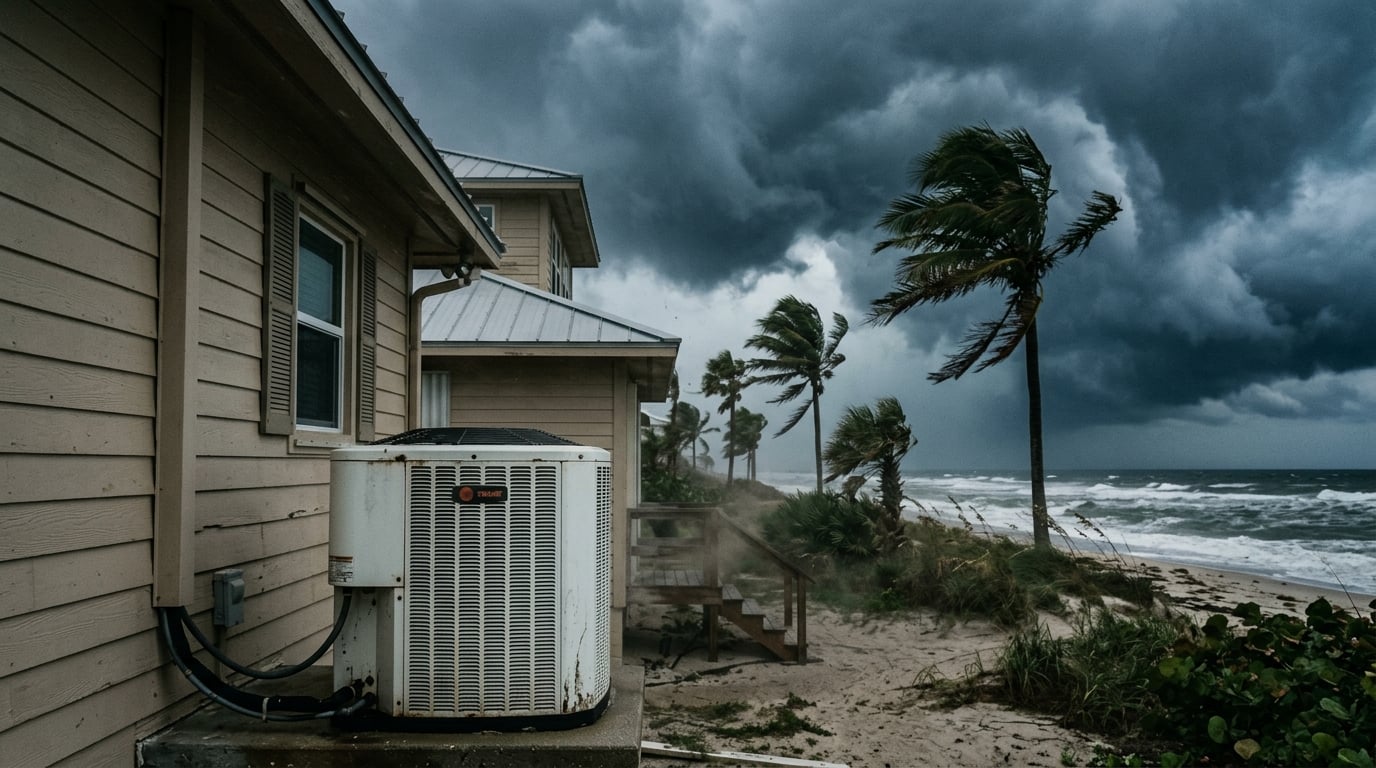
Here's a hard truth about beach living: the same salt air that makes the coast beautiful is brutal on air conditioners. Salt accelerates corrosion on the metal fins, coil, and cabinet of your outdoor unit, and a system that might last 15 years inland can fail in 7–10 near the water. The good news — a little routine care makes a huge difference.
Key Takeaways
- Salt corrodes the aluminum fins and copper coil, choking heat transfer.
- Rinsing the outdoor coil with fresh water every few weeks is the #1 free habit.
- Corrosion-resistant coil coatings and cabinets are worth it near the water.
- Coastal homes benefit from more frequent professional coil cleaning.
What salt actually does to your unit
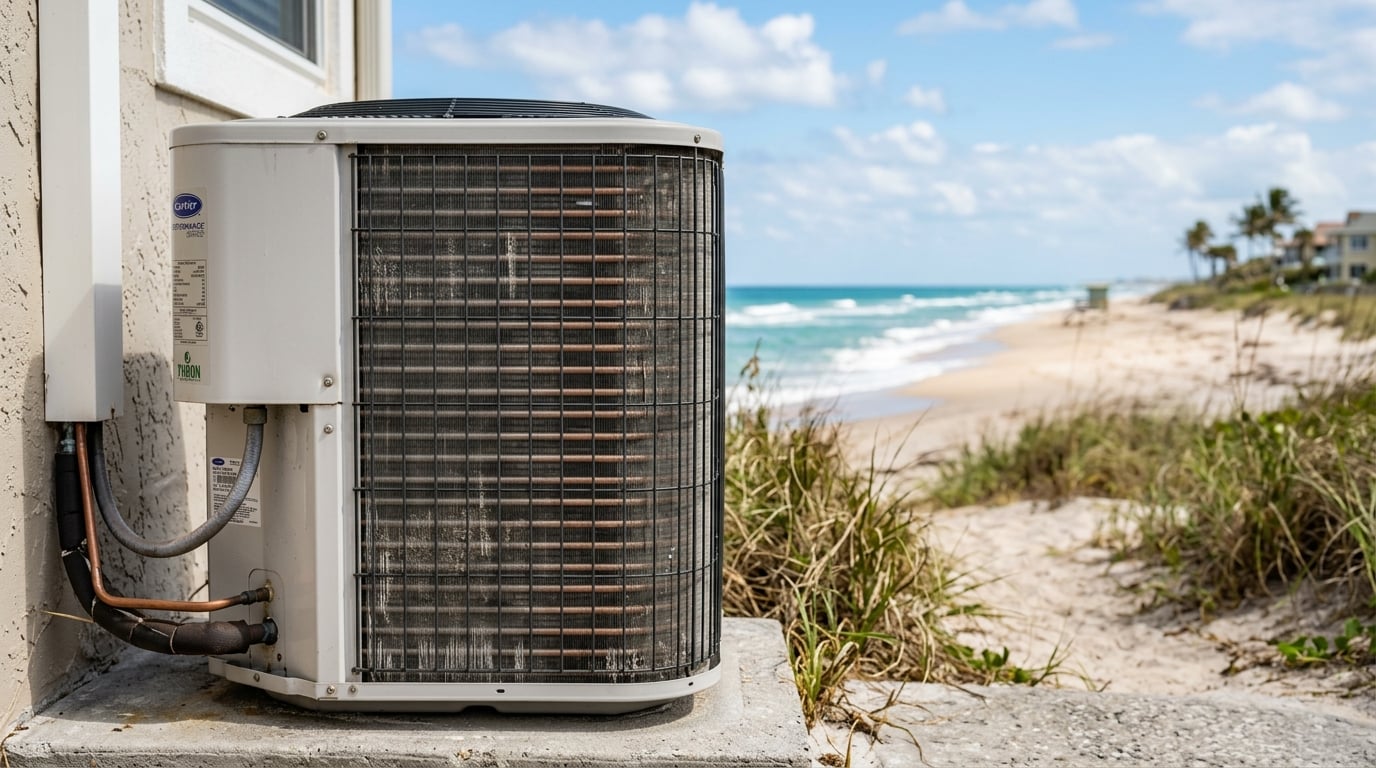
Your condenser cools your home by releasing heat through a coil wrapped in thin aluminum fins. Salt particles settle on those fins and, combined with humidity, cause galvanic corrosion — the fins pit, weaken, and eventually crumble. As they degrade, the coil can’t shed heat efficiently, so the system works harder, runs hotter, uses more power, and wears out faster.
The single best habit: rinse it
Rinsing the outdoor coil with plain fresh water from a garden hose removes accumulated salt before it can do lasting damage. For homes within a mile or so of the Gulf, every 2–3 weeks in season is ideal. Use gentle water pressure from top to bottom — never a pressure washer, which bends and destroys the fins.
Power off, then rinse
Always shut the unit off at the disconnect before rinsing. Aim water straight down through the top grille and across the side fins with low pressure. Let it dry before restoring power.
Protection worth paying for
- Corrosion-resistant coil coatings applied to new or existing coils
- Coastal-rated condensers with coated fins and reinforced cabinets
- Professional coil cleaning 1–2× per year to reach what a rinse can’t
- Positioning and screening that reduces direct salt-spray exposure
Signs corrosion is already at work
- White, chalky, or powdery buildup on the fins and cabinet
- Fins that look flattened, pitted, or are flaking away
- Rust streaks on the cabinet or base pan
- Rising energy bills and weaker cooling as heat transfer drops
Buying new near the water?
If you’re replacing a coastal system, ask us about corrosion-protected models. The upfront difference is small compared to replacing a rusted-out unit years early.
Need a hand with this?
Titan Gulf Air serves Panama City Beach, Bay County & the Gulf Coast — same-day service and honest advice.