Signs Your AC Is Low on Refrigerant (and What It Really Means)
Refrigerant is the fluid that actually moves heat out of your home. Unlike gas in a car, it doesn't get consumed — a sealed system keeps the same charge for its entire life. So if your AC is low on refrigerant, it means one thing: there's a leak somewhere. Catching it early saves you from a total no-cool breakdown in the middle of a Gulf Coast summer.
Key Takeaways
- Refrigerant is not consumed — low charge always means a leak.
- Warm air, ice on the lines, and hissing are the classic warning signs.
- “Topping off” without fixing the leak just delays a bigger repair.
- Running low on charge can burn out your compressor — the most expensive part.
The six warning signs
- 1Air from the vents is cool at best, never cold, even when the system runs non-stop.
- 2The house takes far longer to reach the set temperature than it used to.
- 3Ice or frost forms on the copper refrigerant line or the indoor coil.
- 4You hear a faint hissing or bubbling near the indoor unit (escaping refrigerant).
- 5Your electric bill climbs while comfort drops — the system runs constantly.
- 6The system short-cycles or trips on a hot afternoon and won’t restart.
Why ice is the confusing one
It feels backwards, but low refrigerant makes your AC freeze up. When the charge drops, the pressure in the coil drops with it, the coil temperature falls below freezing, and humidity from our thick Gulf air condenses and freezes solid. Once the coil is a block of ice, no air moves through it and the house stops cooling entirely.
If you see ice, shut it off
Turn the system to OFF and set the fan to ON. That lets the coil thaw without ice-damaging the pump. Then call for service. Running a frozen system is how compressors die.
Why “just add more” is a trap
Some companies will simply pump in more refrigerant and send you a bill. It'll cool for a few weeks — then you're low again, because the leak is still there. You're literally paying to release refrigerant into the air. The right fix is to find the leak, repair or replace the failed component, pull a vacuum, and recharge to the manufacturer's exact spec.
What a leak search looks like
- Electronic leak detection and/or UV dye to pinpoint the source
- Inspection of common failure points: coil, Schrader valves, line-set connections, TXV
- A decision on repair vs. component replacement based on age and cost
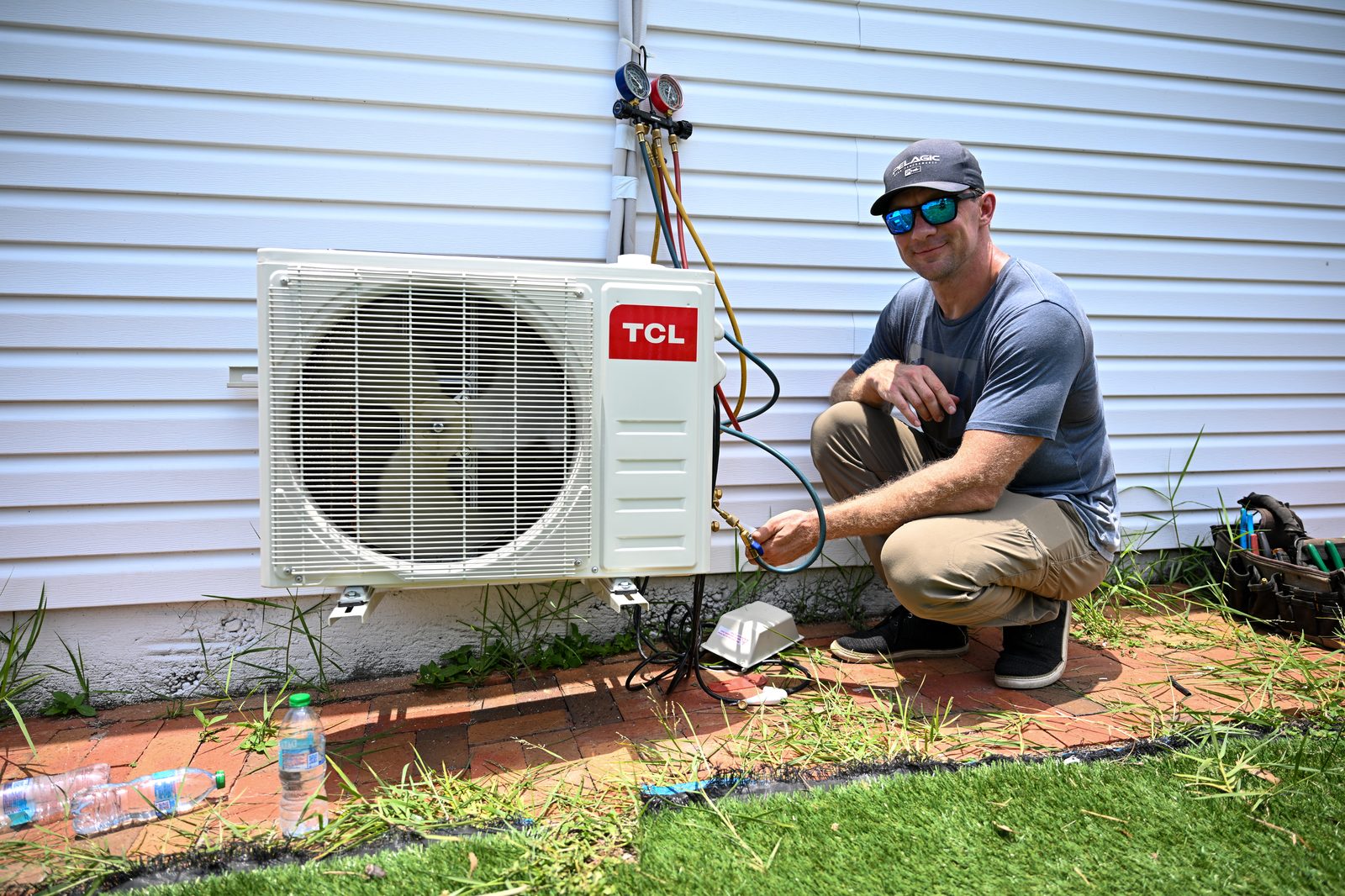
- Proper evacuation and a weighed-in charge — not guesswork
R-410A vs. the new refrigerants
If your system is older and uses R-22, refrigerant is now extremely expensive and being phased out — which changes the repair-vs-replace math. We'll always show you both numbers before you decide.
Need a hand with this?
Titan Gulf Air serves Panama City Beach, Bay County & the Gulf Coast — same-day service and honest advice.