Hurricane Season HVAC Prep for Coastal Homes
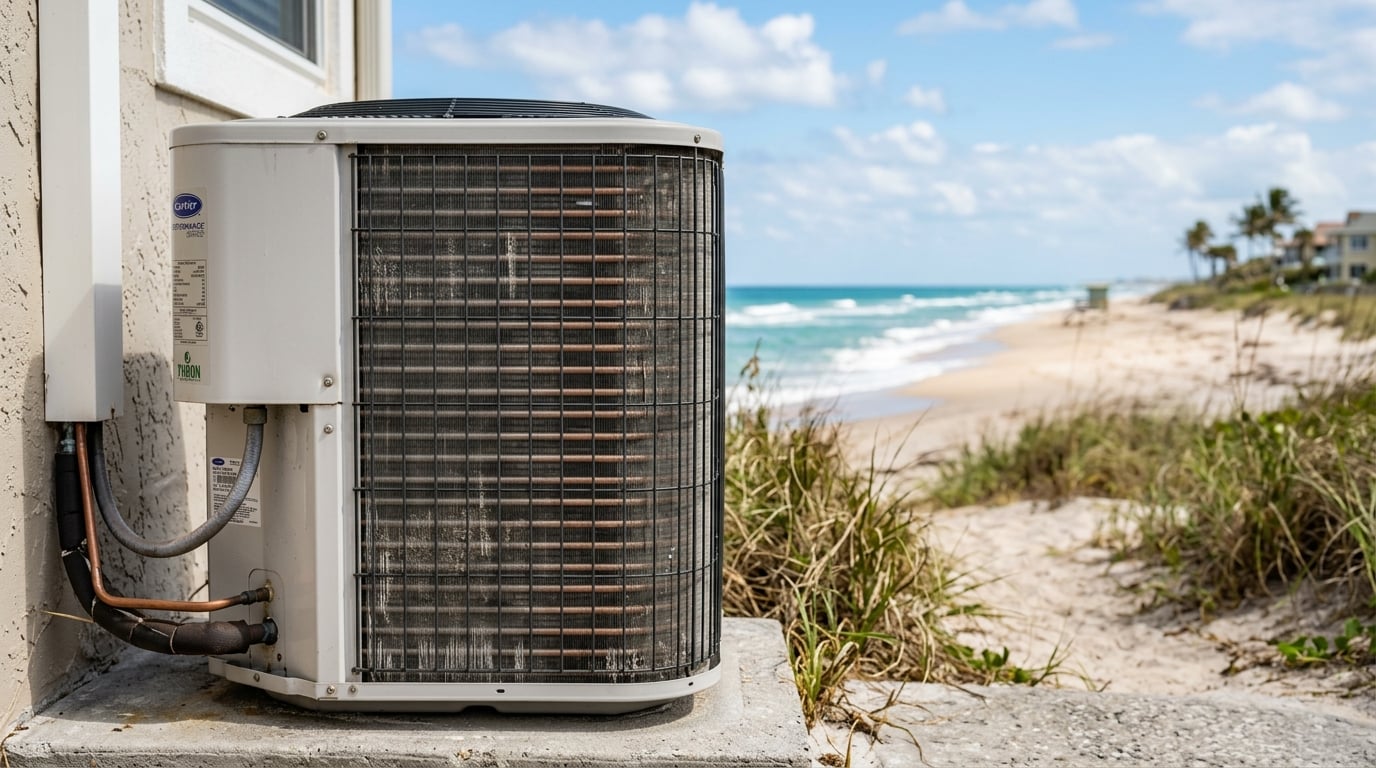
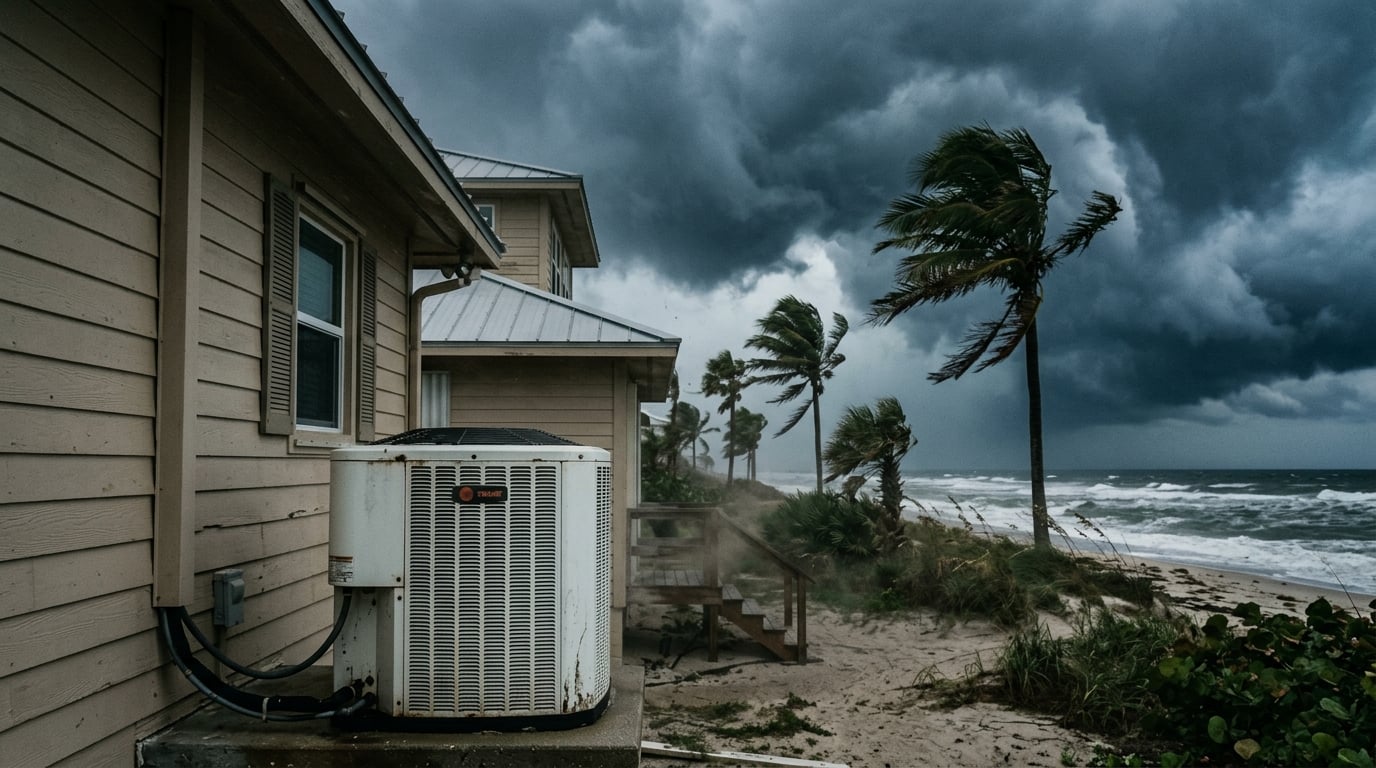
Living on the Gulf Coast means hurricane season is just part of the calendar. Your HVAC system is one of the most expensive things outside your home, and it's directly in harm's way. A few smart steps before and after a storm protect your investment and get you cool again faster.
Key Takeaways
- Shut the system off at the thermostat AND the breaker before a storm hits.
- Never turn on an AC that has been flooded — have it inspected first.
- A surge protector is cheap insurance against lightning and grid surges.
- Photograph your unit before the season for faster insurance claims.
Before the storm
- 1Turn the system OFF at the thermostat, then switch off the breaker and the outdoor disconnect. This protects the compressor from power surges when the grid flickers or comes back on.
- 2Clear the area around the outdoor unit of anything that could become a projectile — patio furniture, planters, loose branches, grill covers.
- 3If flooding is expected and your unit sits low, know that raising a unit is a job to plan before the season, not during a warning. Ask us about hurricane pads and elevated stands.
- 4Do NOT wrap the unit in plastic while it’s running or expected to run — trapped moisture causes corrosion. A breathable cover is fine only while the system is off.
- 5Photograph the unit and note the model/serial numbers for insurance.
Why cut the power?
The biggest storm threat to your AC isn’t always wind — it’s the power surge when electricity returns. Killing the breaker until the grid is stable prevents a fried compressor or control board.
After the storm
- 1Wait until power is fully restored and stable before turning anything back on.
- 2Inspect the outdoor unit for debris, bent fins, shifted position, or standing water inside the cabinet.
- 3If the unit was submerged or partially flooded, do NOT turn it on. Water in the electrical and refrigerant components can destroy the system and create a shock hazard.
- 4Clear any debris from around and inside the top grille before restarting.
- 5Restore power at the breaker first, wait a few minutes, then switch the thermostat back to COOL.
Flooded unit? Call before you flip the switch.
A flooded AC can sometimes be saved if it’s inspected and serviced before power is applied — but running it first almost always turns a repair into a replacement. When in doubt, let us look.
Year-round protection
- Install a surge protector at the unit or panel — inexpensive vs. a new compressor
- Consider a hurricane-rated tie-down or elevated pad for low-lying properties
- Keep a maintenance plan so your system enters storm season in top shape
Need a hand with this?
Titan Gulf Air serves Panama City Beach, Bay County & the Gulf Coast — same-day service and honest advice.