How Often Should You Change Your AC Filter in Florida's Humidity?
Your air filter is the cheapest, easiest thing you can do to protect your AC — and on the Gulf Coast it's also one of the most neglected. Our year-round cooling season and heavy humidity mean your system runs far more hours than an AC in a milder climate, so filters load up with dust, pollen, and moisture much faster. Here's how to think about it.
Key Takeaways
- Most Panama City Beach homes should change a 1-inch filter every 30–45 days during cooling season.
- Pets, rentals, and new construction shorten that interval to every 2–3 weeks.
- A MERV 8–11 pleated filter is the sweet spot for most residential systems.
- A clogged filter is a top cause of frozen coils and high power bills in our climate.
The short answer
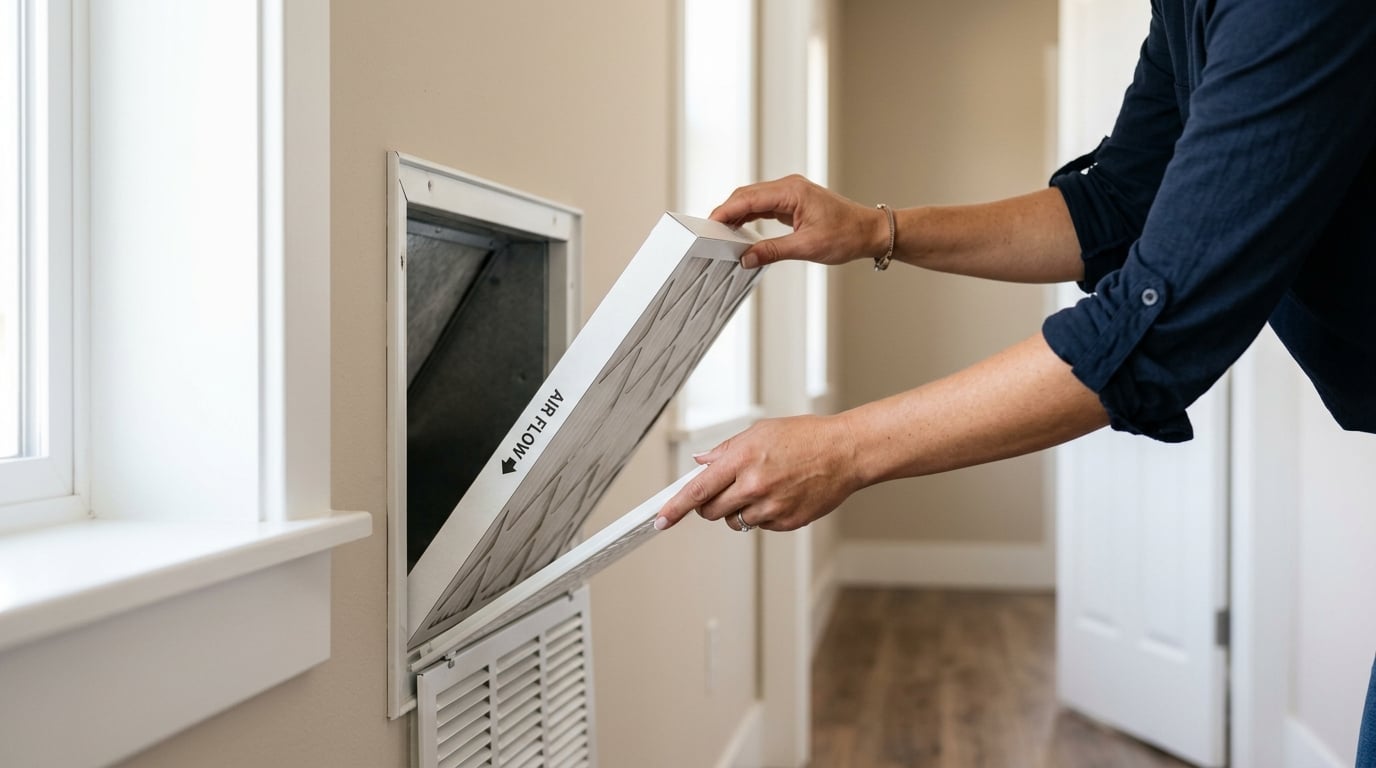
For a standard 1-inch pleated filter in a Bay County home, plan on every 30 to 45 days during our long cooling season (roughly March through November). Thicker 4- to 5-inch media filters can go 6 to 12 months, but you still need to eyeball them because our humidity and coastal dust don't follow the calendar.
Why Florida is different
In most of the country an AC gets a real winter off. Here it barely rests. More runtime means more air pulled through the filter, which means it clogs faster. Add in salt air, fine beach sand, summer pollen, and the mold spores that thrive in humidity, and a filter that would last three months up north can be gray and matted here in half that time.
- Standard home, no pets: every 30–45 days
- Homes with pets or allergies: every 20–30 days
- Rentals & vacation properties between guests: check every turnover
- Recent remodel or new construction: every 2 weeks until dust settles
Which filter should you buy?
Filters are rated by MERV (Minimum Efficiency Reporting Value). Higher isn't always better — a filter that's too dense makes your blower strain and can actually reduce airflow. For most residential systems, a MERV 8 to 11 pleated filter captures pollen, dust, and mold spores without choking your equipment. Only step up to MERV 13+ if your system was designed for it.
Watch the airflow
If you install a high-MERV filter and notice weaker airflow from your vents or a whistling return, the filter is too restrictive for your system. Drop back down a level — protecting airflow protects your compressor.
Signs your filter is overdue
- Visible gray matting across the filter surface
- Higher-than-usual electric bill for the same weather
- Weak airflow from vents or rooms that won’t cool
- Ice or frost on the refrigerant line or indoor coil
- More dust settling on furniture than normal
That last one — ice on the system — is the big one. A clogged filter starves the coil of warm return air, the coil drops below freezing, and you end up with a frozen system that won't cool at all. In our summers that can happen in a single afternoon.
Make it automatic
Titan maintenance-plan members get filter reminders and seasonal tune-ups built in, so you never have to track dates on the fridge. It's the simplest way to keep a coastal system healthy.
Need a hand with this?
Titan Gulf Air serves Panama City Beach, Bay County & the Gulf Coast — same-day service and honest advice.